Start with what they do with an interest, not just the interest's name. A teenager who loves gaming might want a challenge to solve, something to play with friends, or a favourite character on their shelf. Those are different gift directions, even though they begin with the same clue.
The useful decision is this: are you supporting an activity, shared time or something they enjoy displaying? Follow the strongest evidence, then check any detail that could make the gift unsuitable-such as the wrong drawing medium, an incompatible device or a duplicate collectible.
You do not need a crash course in their entire hobby. You need to understand the bit that makes them light up.
What does the clue tell you they actually enjoy?
A current, repeated behaviour tells you more than a broad label. "They're creative" leaves plenty of room for error. "They fill sketchbooks with pencil drawings" gives you an activity, a medium and a likely use for a gift.
Start with something they have recently mentioned, requested or chosen to spend time on. A voluntarily shared wishlist is useful; so is asking a parent or sibling what they are enjoying now. An interest remembered from several Christmases ago needs a quick update before it becomes your shopping brief.
Then follow the branch that best matches your evidence:
- If they regularly make, practise or solve something, choose a gift that supports that activity.
- If they organise games or activities with other people, look for something that works in that group.
- If they collect, decorate or wear things connected to an interest, explore the display or fandom direction.
- If you cannot confirm any of those, ask for one current detail before committing.
These are not personality boxes. Someone can enjoy all three. Choose the branch you can support with the clearest clue, rather than the one that produces the most impressive-looking present.
Watching drawing videos, for example, does not necessarily mean they want art supplies. They might enjoy the finished artwork more than making it themselves. That distinction can save you from buying a hobby they never signed up for.
If they make or solve things, which part should the gift support?
For an active hobby, match the gift to how they participate and their current level. The aim is to give them more of the enjoyable part, not introduce an assignment disguised as a present.
For someone who draws, establish whether they use pencils, ink, paint or digital tools. Paper intended for one medium may not suit another, and a drawing pad is not automatically a useful replacement for a digital workflow. Check the intended medium, paper specifications and size rather than choosing by the artwork on the cover.
For someone who writes, journals or sketches out ideas, the page layout matters. Ruled pages support writing; blank pages leave room for drawing; dotted layouts may suit someone who already likes flexible planning. A small notebook is portable, but it is not generous drawing space. "Stationery" is a starting point, not a final decision.
If they enjoy puzzles, identify what keeps them interested:
- Repeated practice and improving technique: consider a manipulation or logic-puzzle category.
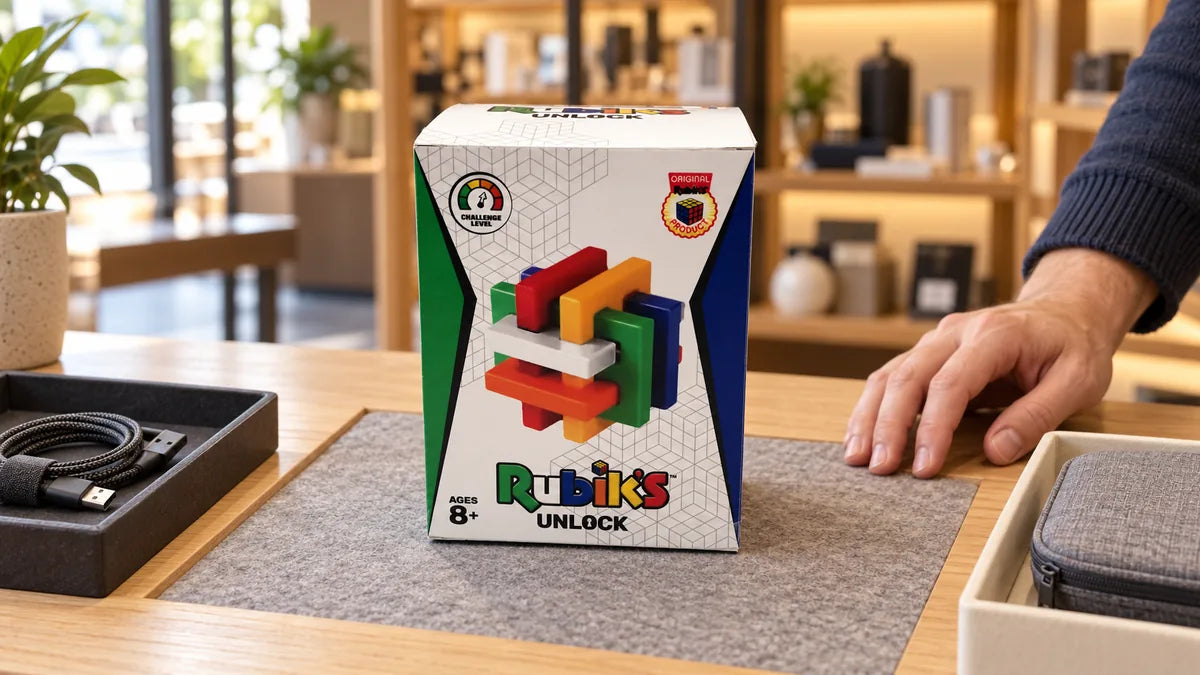
- A puzzle with a reveal or final solution: investigate a self-contained challenge, checking whether it can be reset or replayed.
- Building towards a finished object: explore construction or model-making categories, with attention to complexity, tools and workspace.
The trade-off is between accessibility and depth. An introductory kit can be welcoming for a beginner but restrictive for someone with established preferences. Specialist equipment can be thoughtful when requested, yet risky when you are guessing at specifications.
The same logic applies to baking, music or outdoor hobbies: support the part they already enjoy. If the gift requires a new routine, adult supervision or extra equipment, confirm that those demands are welcome. Christmas should not arrive with compulsory homework.
If the fun is social, what will get used together?

Choose a shared-activity gift when the strongest clue is who they spend time with and what that group enjoys doing. This suits the teenager who brings out a game, suggests an activity or enjoys having something ready when friends visit.
Do not assume that a keen video gamer wants a board game. Look for evidence that the tabletop format appeals: perhaps they already play cards, enjoy strategy games with family or like quick challenges with friends. If that is the pattern, browsing Family Games gives you a relevant place to compare formats.
Let the usual gathering decide the next branch:
- If they normally play with one other person, check that the game works well at two players.
- If friends join in casually, favour an approachable setup and a session length that suits a relaxed visit.
- If the group enjoys learning rules and planning ahead, a more involved strategy format may be worth exploring.
- If competition regularly spoils the fun, investigate cooperative play rather than assuming everyone wants a winner.
Check the recommended age, content, player count and playing time on the individual listing. Avoid adult-themed or drinking-game formats for a teenage recipient.
There is also an ownership question. A game can be their gift while still being shared, but it should reflect their tastes - not simply solve the family's Christmas-afternoon entertainment problem. Choose something they would want to bring out again after the visitors leave.
If they love a fandom, do they want to display it?

Fandom gifts make sense when you know both what they like and how they like to express it. Following a series, game or fictional world does not automatically mean they want merchandise from it.
First establish the favourite character, team or theme. Then establish the format. Someone who likes soft collectibles may not want a rigid display figure. Someone who keeps a carefully arranged shelf may have no interest in a large plush. The subject can be right while the object is wrong.
If they already collect, duplicate checking matters. Ask which pieces they own or invite them to share a few specific ideas. You can preserve the surprise by choosing from an approved range rather than asking them to identify one exact present.
Space is part of suitability, too:
- For an open display, check the object's height, depth and stability against the intended shelf.
- For a boxed collection, allow for the packaging footprint, not just the item inside.
- For a soft collectible, consider whether it will live on a bed, chair or shelf - and whether there is room.
- For something that needs regular cleaning or careful handling, check the care instructions and whether that responsibility suits the recipient.
Avoid buying a decorative object because you think they have "grown out of" something softer or more playful. Equally, do not choose a childlike presentation simply because the interest includes fictional characters.
Christmas is not an entrance exam in someone else's fandom. Confirm the preference, understand the format and let their taste do the deciding.
Does the choice depend on exact specifications?
If an item must connect to, fit, charge or work with something they own, verify the relevant specification before buying. A close match can still be an unusable gift.
This is especially important with electronics. "They have a phone" does not tell you the model, connector, case dimensions or charging requirements. "They play games" does not identify the platform or which accessories their setup supports.
When you know the device and the intended job, electronics and gadgets becomes a useful comparison path. Start with the problem the gift should solve: supporting a device on a desk, making equipment easier to carry or adding a feature they have actually asked for. Then read the compatibility details on the individual listing.
If those details remain unknown, do not treat "universal" as a substitute for checking. Compare the stated dimensions, supported devices, connections and power requirements.
The same branch applies beyond tech. Music accessories may depend on an instrument model; hobby refills may require a particular system; an expansion may be useless without the original game.
Also establish what is required after opening the box:
- Is it usable on its own, or does it need a separate purchase?
- Are batteries, tools or other supplies required?
- Does it need an app, account or ongoing subscription?
- If the recipient is under 18, are any relevant parental permissions or setup arrangements in place?
When one missing specification determines whether the gift works, ask for it. Surprise is lovely; compatibility is rather important too.
What should change when budget or Christmas timing is tight?
When your spending limit is firm, narrow the scale of the gift rather than weakening its connection to the recipient. A modest item that suits an established interest is more thoughtful than a larger bundle padded with things they are unlikely to use.
Set a comfortable total before browsing, including any essential extras. A kit that needs additional materials or a gadget requiring a separate accessory may cost more to make useful than the initial item suggests.
For a smaller present, stocking filler or agreed exchange limit, browse gifts under $30 with the interest branch already in mind. The budget collection helps constrain spending; your knowledge of the teenager still needs to determine the choice. Check the individual listing rather than assuming every item in a budget range suits their age or interests.
If you have more to spend but limited detail, do not increase the technical complexity simply to reach the budget. Ask whether they would prefer one requested item or to choose something together.
Christmas timing creates a different pressure. If you cannot verify a crucial preference before you need to order, change direction instead of gambling on expensive specialist gear. Check the retailer's current delivery information and applicable return conditions, but do not use either as a reason to ignore an obvious mismatch.
A deadline can shorten your browsing time. It cannot make an uncertain clue more accurate.
What if you still cannot verify the details?

Choose the option that relies on the fewest unconfirmed preferences, while remaining connected to something you genuinely know about them.
If you know they regularly write but not their favourite fandom, a notebook with the right page layout may make more sense than character merchandise. If you know they enjoy solo challenges but not their gaming platform, a self-contained puzzle avoids device compatibility-provided the challenge type appeals. If you know they love hosting friends, a suitable shared activity may be more relevant than a collectible.
None of those categories is automatically right. The reason for choosing still matters.
When even the activity is uncertain, ask a bounded question that resolves the gap: "Are you mostly drawing on paper or digitally now?" is easier to answer than "What do teenagers want for Christmas?" You can also ask for a few things they would genuinely use, then make the final choice yourself.
If nothing current can be confirmed, agree to choose together rather than committing to a substantial hobby purchase. That gives them a say without turning the gift into a test of how well you can decode them.
Once you have one useful clue, browse LatestBuy's gifts for teens and tweens with a specific purpose: something for their next drawing session, their usual games night or a shelf they actually want to fill. Check each item's age guidance and requirements rather than relying on the recipient category alone.
The goal is not to find the most "teen" present. It is to find something for this teenager - and know why you chose it.
For the next browse step, compare the fit against LatestBuy gift guide.